History has never been entirely neutral. It has always been shaped by those who recorded it, those who funded the recording, and those who decided what was worth preserving. We know this. Scholars have debated it for centuries.
But something is shifting, and it is shifting quickly.
Artificial Intelligence (AI) is giving us extraordinary new tools to recover, restore, and retell the past. Damaged photographs are being enhanced. Lost voices are being reconstructed. Ancient texts are being translated at scale. These are genuinely remarkable developments, and we should be honest about that.
At the same time, those same tools are introducing new vulnerabilities into the historical record. Not as a distant theoretical risk, but as a present and practical one. The question is not whether AI will change how history is recorded and understood. It already is. The question is whether we are being thoughtful enough about what that means, and deliberate enough about what we do next.
This post is not a warning. It is an invitation to think carefully, act responsibly, and build the right habits before we need them most.
Ten ways AI could distort the historical record
1. Deepfake video of public figures and historical events
We are approaching a point where video footage of virtually anyone saying virtually anything can be generated convincingly. This applies not only to contemporary figures but potentially to archival footage – augmenting, replacing, or fabricating what appears to be documentary evidence. A speech never given. A meeting never held. A confession never made.
2. Synthetic audio recordings
Voice cloning tools can already replicate a person’s voice from relatively short samples. In a historical context, this creates the possibility of fabricated audio testimony, forged oral histories, or manufactured recordings attributed to figures who have died and cannot refute them. Audio has long been treated as reliable evidence. That assumption is becoming harder to sustain.
3. AI-generated photographs and imagery
Still images carry enormous historical weight. A photograph of an atrocity, a protest, a moment of political significance, these shape how events are remembered for generations. AI image generation tools can now produce photorealistic images that never existed. The forgery of historical photographs is not new, but its industrialisation through AI changes the scale and accessibility of the problem entirely.
4. Fabricated textual documents
Letters, diaries, manifestos, government reports, witness statements – AI language models can produce highly convincing text in the style of almost any writer or era. The risk of fabricated primary source documents entering archives, being cited in research, or circulating as authentic is not hypothetical. It requires active consideration now.
5. Selective rewriting of digital encyclopaedias and reference sources
Much of what people learn about history today comes not from books or archives but from online reference sources updated continuously and in real time. AI tools that can generate plausible-sounding historical content at scale could be used, deliberately or inadvertently, to introduce inaccuracies, re-frame narratives, or quietly shift the consensus view on past events. Wikipedia recently published a guideline for editors writing articles with large language models – Wikipedia effectively banned AI-generated articles.
6. Algorithmic amplification of particular historical narratives
Even without explicit fabrication, AI recommendation and content-ranking systems can shape which version of history reaches the most people. By surfacing certain sources, perspectives, or interpretations repeatedly and suppressing others, these systems can effectively rewrite the popular understanding of events without altering a single document.
7. Translation distortion at scale
As AI-powered translation tools are used to make historical texts from other languages accessible to broader audiences, there is a real risk of systematic translation choices that embed particular interpretations. Nuance lost in translation, terminology that does not carry across cultures faithfully, or deliberate framing choices can all distort meaning, and at the scale AI enables, these distortions can propagate widely and quickly.
8. Restoration and “enhancement” that introduces fiction
AI tools are increasingly used to restore degraded photographs, enhance old film footage, and reconstruct damaged documents. This is valuable work. But every act of restoration involves choices about what was “probably there” before the damage. When those choices are made algorithmically, without transparency, the line between restoration and creative reconstruction becomes difficult to see.
9. AI-generated oral history and synthetic testimony
Oral history projects are vital for capturing the lived experience of people whose stories are not preserved in formal archives. AI tools that generate synthetic testimonies, whether to fill gaps or to create what might have been said, risk introducing fictional voices into the historical record in ways that are difficult to distinguish from authentic ones.
10. Automated content moderation removing primary sources
AI-powered content moderation systems, designed to remove harmful content, can and do remove historically significant material – footage of atrocities, documentation of abuses, records of events that powerful actors would prefer were not preserved. The irony is that the same tools intended to prevent harm can, at scale, erase evidence needed to understand and account for it.
What historians need to do
The burden here does not fall on historians alone but they have a particular responsibility, and a particular expertise, that the rest of us need them to exercise.
1. Develop and adopt robust authentication standards. The historical community needs agreed frameworks for verifying the provenance and authenticity of digital sources, frameworks that account for what AI can now fabricate and that are updated as the tools evolve. This cannot be left to individual institutions or researchers working in isolation.
2. Advocate for metadata and chain-of-custody requirements. Every digital historical record should carry verifiable metadata: when it was created, by whom, how it has been modified, and where it has been stored. Historians, archivists, and institutions need to push for this as a standard expectation, not an optional extra.
3. Engage directly with AI developers and policymakers. The people building these tools need historical perspective in the room. Historians should be at the table when decisions are made about training data, synthetic content standards, and the preservation of digital archives, not arriving after the fact to critique the results.
4. Prioritise digital literacy in historical education. Teaching people how to evaluate sources has always been a core part of historical education. That curriculum now needs to include how AI-generated content works, how to identify its markers, and what questions to ask of any digital source before trusting it.
5. Build collaborative, open-access verification infrastructure. Individual experts checking sources in isolation is not sufficient. The historical community needs shared tools and platforms for flagging, reviewing, and verifying contested or suspicious digital content – open enough to be trusted, robust enough to function at scale.
What the rest of us can do
This is not only a problem for specialists. The historical record is a collective inheritance, and its protection is a collective responsibility.
1. Document your own history deliberately. Personal and community histories – photographs, letters, recordings, diaries – are increasingly the raw material from which broader history is constructed. Keep them. Organise them. Make sure they are not lost to a failed hard drive or a discontinued cloud service. The act of preservation is itself a form of participation.
2. Be cautious with what you share and amplify. Before sharing historical footage, photographs, or documents – especially those that conveniently confirm a pre-existing narrative – pause to ask where they came from and whether they have been verified. Misinformation spreads because ordinary people, acting in good faith, pass it on.
3. Learn the basics of source verification. You do not need to be a professional historian to ask basic questions: Who created this? When? Where was it originally published? Does the metadata match the claimed date? Free tools exist to reverse-image search photographs, check digital metadata, and trace the provenance of online content. Using them occasionally is a meaningful habit.
4. Support institutions that preserve authentic records. Public libraries, national archives, local history collections, and independent journalism organisations are all part of the infrastructure that keeps reliable historical records intact. They are often underfunded and under threat. Supporting them – financially, politically, or simply by using and valuing them, matters.
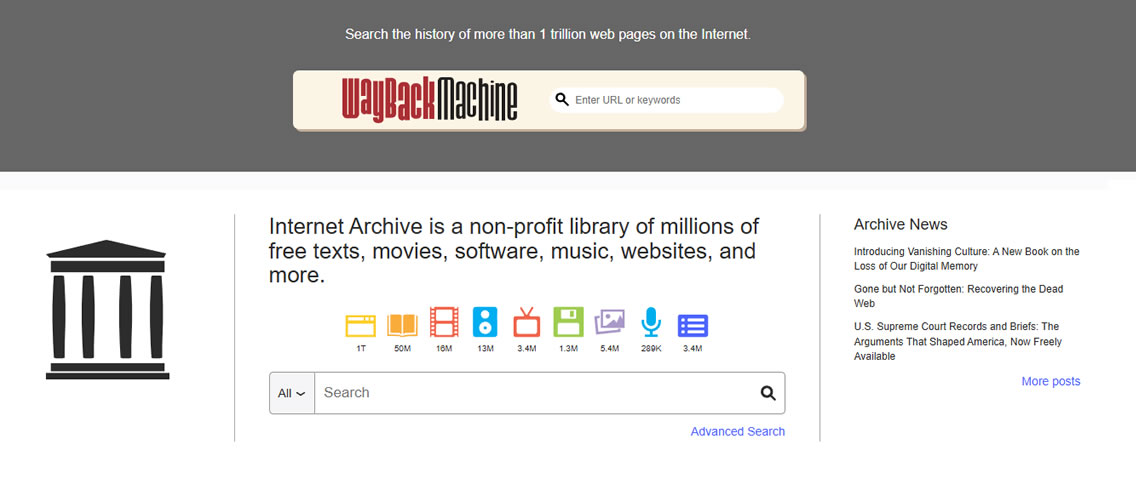
At this point, I would like to stress that it’s deeply concerning to see some media/news organisations choosing to block the Internet Archive (and its Wayback Machine) from preserving their web pages. If this trend continues, it risks eroding one of the few widely accessible systems we have for independently verifying how content has evolved over time. A constructive way forward is to more deliberately recognise and integrate the Internet Archive into a broader content verification infrastructure, treating it not as an optional extra, but as a foundational layer for accountability and transparency online – helping to reinforce trust in the integrity of the digital public record.
5. Push for transparency in AI-generated and AI-enhanced content. Expect and demand that organisations, platforms, and creators clearly label when content has been generated, enhanced, or reconstructed using AI. Normalise asking the question. Normalise expecting an honest answer.
The framing that matters
History is not a fixed set of facts stored safely in a vault somewhere. It is a living, contested, continuously reconstructed account of what happened, why it happened, and what it means. It has always been vulnerable to distortion – by the powerful, by the careless, by the well-intentioned but mistaken.
AI does not change that fundamental truth. It changes the scale, the speed, and the accessibility of both the distortion and the tools to counter it.
The opportunity here is real. AI can genuinely help us surface histories that were buried, restore records that were damaged, translate materials that were inaccessible, and make the historical archive available to people who never had meaningful access to it before. That is worth pursuing seriously and with ambition.
But the tools that enable all of that are the same tools that could undermine it. Which outcome we move towards is not determined by the technology. It is determined by the choices we make – collectively, deliberately, and now, before the habits of a more careless era become too difficult to reverse.
The past belongs to all of us. So does the responsibility for keeping it true.
If this raises questions worth discussing, or if you have thoughts on how communities are already responding to these challenges, the comments are open.
First dropped: | Last modified: September 24, 2026