The UK housing debate remains stuck in a loop. Politicians, developers and commentators repeatedly argue that the crisis is simply about building more homes. But the evidence increasingly shows that the real issue is affordability, and continuing to build traditional housing in traditional ways will not solve it.
According to the Office for National Statistics, the average UK house price remains around eight times average annual earnings, with many regions significantly exceeding that ratio. Meanwhile, data from the Department for Levelling Up, Housing and Communities consistently shows the UK falling short of its target of delivering 300,000 homes per year. Even if that target were met, it would not guarantee affordability because most new homes are still built using expensive, labour-heavy construction methods.
It is time to stop asking how many houses we build and start asking what kind of housing we actually need.
Breaking away from traditional housing models
The UK remains deeply attached to brick-and-mortar housing, large footprints, and layouts designed decades ago around very different social and economic realities. These homes are expensive to construct, expensive to maintain, and energy inefficient by modern environmental standards.
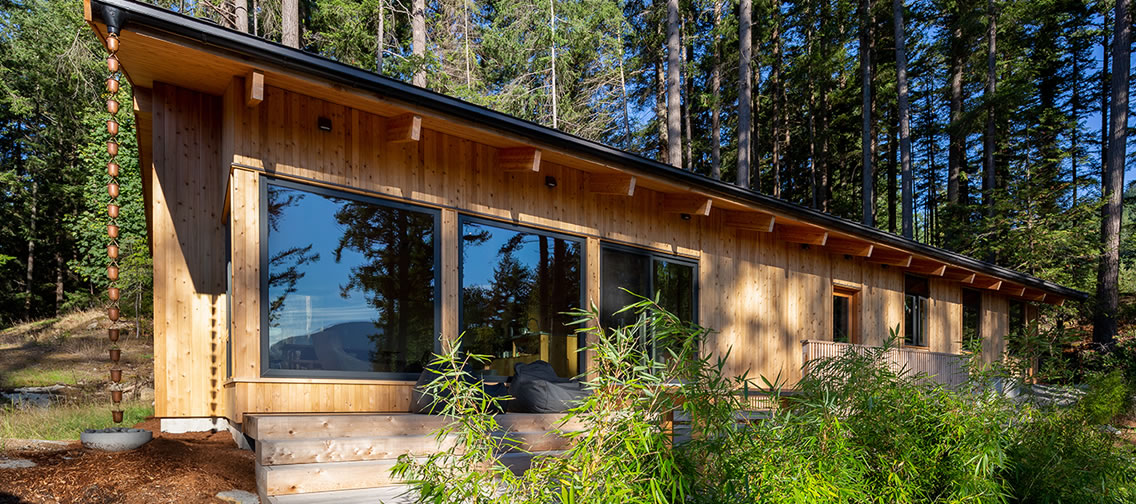
Yet modern manufacturing technology makes it entirely possible to rethink housing delivery. Prefabricated cabin-style homes, built using sustainable timber and manufactured off-site, offer a credible and scalable alternative. Timber is one of the few major construction materials that can be replenished through sustainable forestry, while also providing excellent natural insulation.
Small, well-designed cabins require far less energy to heat or cool, significantly reducing both household costs and carbon emissions. With energy prices remaining volatile, this level of efficiency is not simply environmentally responsible, it is economically essential.
Unlocking land without destroying it
One of the most contentious aspects of UK housing policy is development on greenbelt land. Public resistance is understandable, as traditional developments permanently alter landscapes and strain local infrastructure.
However, lightweight prefab cabins could provide a new compromise. These homes can be installed without heavy fixed foundations, meaning they create far less environmental disruption and can potentially be removed or relocated if land needs change in the future. Carefully planned, landscaped cabin communities could preserve natural surroundings while still increasing housing availability.
Solving labour and construction bottlenecks
The UK construction sector continues to face severe skilled labour shortages. Prefabricated housing dramatically reduces reliance on onsite trades by shifting production into controlled factory environments. Homes can be delivered largely complete, cutting build times from months to weeks and significantly reducing overall costs.
This model is already proven in sectors such as holiday parks, where thousands of people willingly stay in compact, high-quality cabin accommodation each year. The concept is familiar, functional and accepted – it simply has not yet been repositioned as a serious long-term housing solution.
Making cabin living aspirational
Perhaps the biggest barrier to adoption is cultural rather than technical. Cabin living must be repositioned from being viewed as temporary or budget accommodation into something aspirational, stylish and environmentally progressive.
Green living is already gaining social traction across the UK. If cabin communities are designed with high-quality landscaping, shared green spaces, modern interiors, and strong sustainability branding, they could become highly desirable lifestyle choices rather than perceived compromises.
Put simply, affordable housing needs a rebrand. Cabin living should be presented as smart, eco-conscious, minimalist and modern – not as a fallback option.
Affordable housing that works across generations
Cabin communities could address two of the UK’s most urgent housing gaps. They would provide genuinely affordable starter homes for younger people locked out of home ownership, while also offering attractive downsizing options for retirees seeking lower maintenance and lower energy costs.
The lower construction and maintenance costs also make these homes ideal for affordable rental models, potentially easing pressure on social housing waiting lists while reducing public housing subsidy burdens.
If the market will not deliver, Government should
Private developers may be slow to adopt this model due to perceived market risk or unfamiliarity. In that case, government intervention may be necessary to drive early adoption. The UK has historically used public housing programmes to solve housing shortages, and there is no reason similar leadership could not accelerate sustainable prefab housing today.
Strategic government investment could establish manufacturing standards, pilot environmentally sensitive cabin communities, and demonstrate long-term viability to the private sector.
A smarter vision for housing
The UK housing crisis will not be solved by repeating the same construction methods and expecting different results. Affordable, sustainable cabin housing offers a realistic, environmentally responsible and socially acceptable alternative that aligns with modern living expectations.
The technology already exists. Public acceptance is achievable. What is required now is the willingness to challenge tradition and embrace a housing model designed for the future.
If we make sustainable cabin living desirable, stylish and environmentally progressive, it will not feel like compromise, it will feel like common sense.
Reducing the cost of building houses: A vital step towards solving the housing crisis
First dropped: | Last modified: February 20, 2026