There is a moment in every technology shift where the question stops being “Is this possible?” and becomes “Why aren’t we doing this already?”
Education is arriving at that moment.
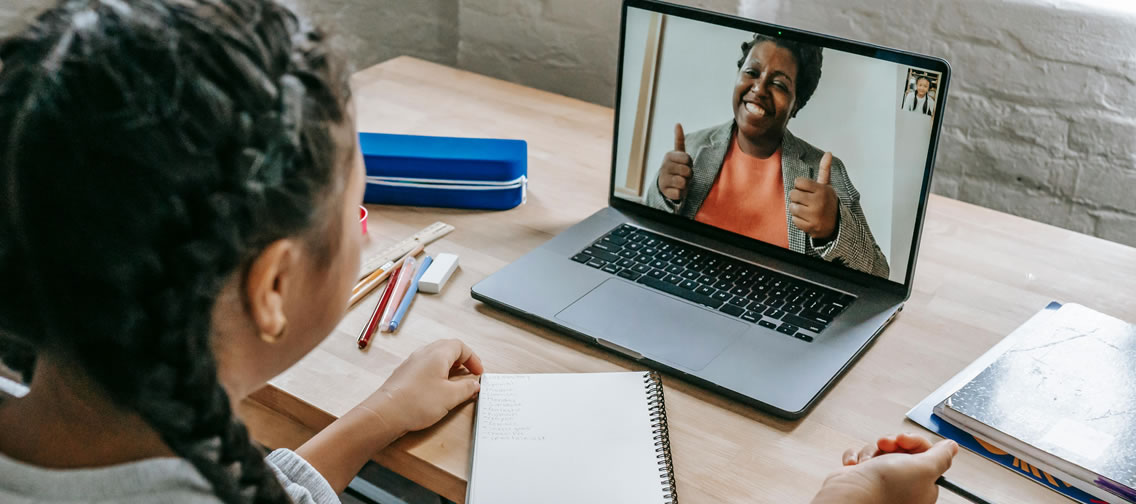
For decades, the gold standard of learning has been the one-to-one tutor: a patient expert who adapts explanations to the student, notices confusion instantly, and adjusts the lesson until the concept clicks. The problem is simple – there are not enough human tutors to give every student that experience.
Artificial intelligence changes that equation.
Recent advances in ChatGPT’s AI tutoring capability, announced by Open AI, now allow students to learn math and science through interactive exploration rather than static explanations. Instead of reading about equations, students can manipulate variables and watch relationships update instantly. Abstract ideas become something you can play with. Graphs move. Systems respond. Concepts reveal themselves step by step.
This is closer to how real understanding happens.
Millions of people are already using AI to work through difficult math and science questions each week. These new interactive learning modules now walk students through foundational topics, from algebraic relationships to physics principles, helping them see why the answer works rather than just showing them the result.
What is emerging is something education systems have never been able to provide at scale: a personal tutor for every learner.
Not a replacement for teachers, but a powerful layer around them. Teachers still guide, mentor, and inspire. AI handles the infinite patience, explaining the same concept ten different ways, generating examples instantly, and adapting to each student’s pace.
The implications are difficult to ignore.
Students who fall behind could get unlimited support instead of waiting for the next lesson. Curious learners could explore far beyond the curriculum. Schools with limited resources could provide the same academic scaffolding as the most well-funded institutions.
In other words, the traditional constraints of classroom ratios start to disappear.
Which raises an uncomfortable policy question.
If we now have the ability to provide a personal AI tutor for every secondary school student, should governments make it standard (even mandatory) part of school life – like textbooks, internet access, or school meals?
The technology exists. The real debate is no longer about whether AI can help students learn. It is about whether education systems will move fast enough to use it.
First dropped: | Last modified: March 11, 2026