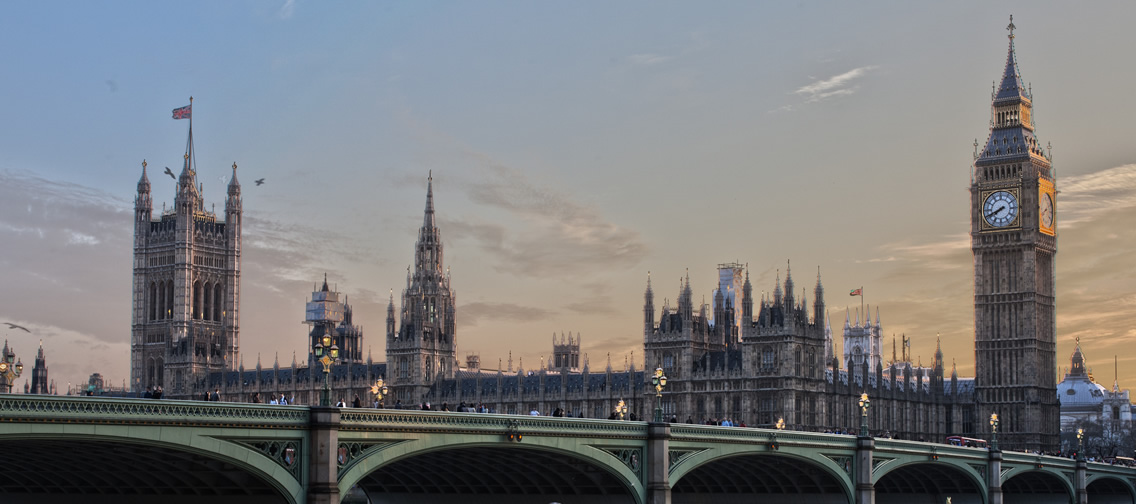
Britain stands at a defining moment in its modern history. Once recognised as a nation that shaped global trade, diplomacy, and innovation, Britain now faces an uncomfortable question: are we still looking forward, or are we becoming trapped in nostalgia and reactive policymaking?
Across the world, the pace of technological, economic, and geopolitical change is accelerating. Nations that invest strategically in growth, infrastructure, artificial intelligence, and international cooperation are positioning themselves to dominate the next economic era. Yet, Britain appears increasingly distracted by domestic political narratives that prioritise short-term populism over long-term national prosperity.
A world moving forward without Britain
Global competition is intensifying, particularly in emerging technologies and green industry. For example, has rapidly expanded its dominance in electric vehicle production, challenging companies such as while simultaneously investing heavily in artificial intelligence research, an area long associated with Western leadership through organisations like .
China’s strategic, state-backed industrial planning demonstrates what sustained national focus on economic expansion can achieve. Whether one agrees with China’s political system or not, its economic trajectory shows a clear commitment to long-term planning and global positioning.
Britain, by contrast, risks losing competitiveness due to fragmented policy priorities and limited long-term industrial vision. If the UK wishes to remain economically relevant, it must begin by acknowledging a simple reality: economic growth must become the government’s primary and overriding objective for the foreseeable future.
Growth is not merely about GDP statistics. It determines living standards, public service funding, national security capability, and global diplomatic leverage.
Reconsidering Britain’s relationship with Europe
One of the most consequential geopolitical shifts in recent British history was leaving the . While Brexit was framed as an opportunity to reclaim sovereignty and economic flexibility, the long-term economic and diplomatic consequences remain widely debated and increasingly scrutinised.
Serious, mature national leadership requires the courage to reassess major strategic decisions. Rejoining or developing deeper structural integration with the European Union should no longer be politically taboo. The EU remains the UK’s largest geographic trading partner, a regulatory superpower, and a significant global diplomatic bloc.
Re-engagement would not represent a reversal of national identity or independence. Instead, it would reflect pragmatic economic strategy. Many successful global economies operate within multinational frameworks while maintaining strong domestic governance and cultural identity.
Britain must ask itself whether ideological rigidity is worth the economic cost of reduced trade efficiency, investment uncertainty, and diminished influence in European policymaking.
The need for balanced global partnerships
At the same time, Britain cannot afford to frame global relations through a binary West vs. East lens. The future global economy will likely be multipolar, shaped by several major power blocs rather than a single dominant alliance.
Constructive and pragmatic engagement with , China, emerging Asian markets, African growth economies, and Middle Eastern investment hubs should form part of a diversified diplomatic and economic strategy. This does not mean abandoning values or ignoring geopolitical tensions. Instead, it requires separating economic cooperation from ideological confrontation wherever possible.
Britain has historically excelled as a trading nation capable of maintaining complex international relationships. Rebuilding this diplomatic agility could restore Britain’s influence across multiple global spheres.
Rethinking the “Special Relationship”
The long-standing strategic alignment with the has delivered substantial benefits in defence, intelligence, and trade. However, modern geopolitics demands that Britain reassess this relationship through the lens of equal partnership rather than automatic alignment.
True alliances are strongest when both parties maintain independent strategic leverage. Britain must broaden its international partnerships to avoid economic overreliance on any single global power.
Diversification enhances resilience. In an increasingly unpredictable global economy, nations that maintain wide-ranging partnerships are better protected from economic shocks and political shifts.
Making economic growth the “National Mission”
If Britain is to reclaim its global standing, economic growth must become a unifying national mission transcending party politics. Achieving this requires:
- Long-term investment in emerging technologies, particularly artificial intelligence and green energy
- Rebuilding international trade partnerships and reducing regulatory trade friction
- Strategic infrastructure investment to improve productivity
- Education and workforce reskilling aligned with future industries
- Political stability and policy consistency that encourages foreign investment
Growth cannot occur in an environment of constant political turbulence or short electoral policy cycles. It requires sustained strategic planning spanning decades rather than parliamentary terms.
Restoring Britain’s moral and diplomatic voice
Economic strength and moral leadership are not mutually exclusive. Historically, Britain’s global reputation was built upon both commercial influence and principled international engagement. Reclaiming that balance is essential.
Britain must demonstrate the confidence to speak against injustice globally while maintaining constructive engagement with diverse international partners. Nations that command both economic power and ethical credibility often exert the greatest long-term global influence.
Choosing the future
The United Kingdom still possesses enormous advantages: world-class universities, a powerful financial sector, deep cultural influence, and strong legal institutions. However, these strengths alone cannot guarantee future prosperity.
The defining question facing Britain today is whether it will embrace pragmatic global engagement and economic modernisation, or remain constrained by political nostalgia and strategic hesitation.
Britain has historically thrived when it has looked outward, adapted to global change, and led international innovation. To do so again, it must place growth at the centre of national strategy, rebuild meaningful global partnerships, and demonstrate the confidence to reassess past decisions when the national interest demands it.
The world is entering a new economic and geopolitical era. Britain must decide whether it intends to help shape that future or simply react to it.
I tried to keep party politics out of this article but I care too deeply about our country to keep it out completely, so I will say this ….. If we are serious about building a prosperous and sustainable future, a government led by Reform UK is not the answer.
First dropped: | Last modified: February 14, 2026